Palm Tree – The Tree of a Thousand Uses
Earth’s Most Generous Tree
Mr. Chandru Mohan , EGF India
12/17/2023
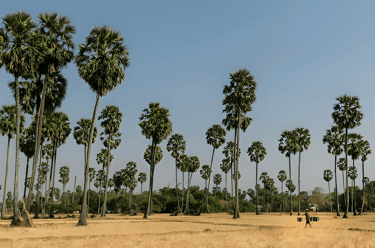
The Palmyra tree (Borassus flabellifer), known as Panai Maram in Tamil, is one of the most ancient and valuable trees in South and Southeast Asia. Standing tall and majestic, it is often referred to as the “Tree of Life” and the “Tree of a Thousand Uses” because almost every part of the tree can be used – for food, medicine, shelter, livelihood, and even spirituality.
Unlike many commercial crops that need fertilizers, pesticides, or excessive water, the Palmyra thrives naturally in dry, coastal, and drought-prone regions, making it a gift of nature to humanity.
Botanical Features
Scientific Name: Borassus flabellifer
Family: Arecaceae (Palm family)
Height: Can grow up to 30 meters tall
Lifespan: 100+ years (some live for centuries)
Leaves: Large fan-shaped leaves, each up to 3 meters wide
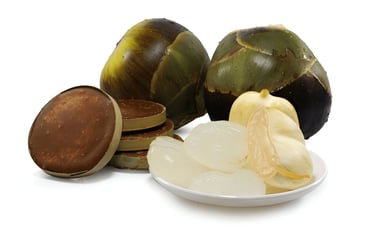
Fruit: Round, dark brown to black, with sweet jelly-like seeds (nungu/ice apple)
Its long lifespan and resilience make it a symbol of strength, endurance, and sustainability.
1. Food and Nutrition from Palmyra
The Palmyra tree is a natural supermarket:
Tender Fruit (Nungu / Ice Apple):
A soft, jelly-like fruit rich in water content, minerals, and cooling properties. It is the perfect summer fruit for hydration.
Ripe Fruit Pulp:
Sweet and fibrous, used to prepare sweets, puddings, jams, and traditional dishes like panai olai adai.
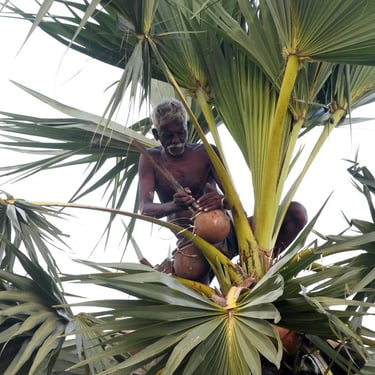
Sap (Neera):
A sweet, non-alcoholic drink collected fresh from the inflorescence. When boiled, it becomes palm sugar or jaggery. When naturally fermented, it becomes toddy.
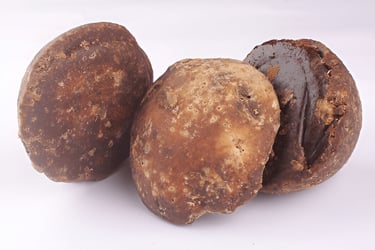
Palm Jaggery (Karupatti):
A healthier alternative to refined sugar. Rich in iron, calcium, and minerals, it is used in sweets and Ayurvedic medicine.
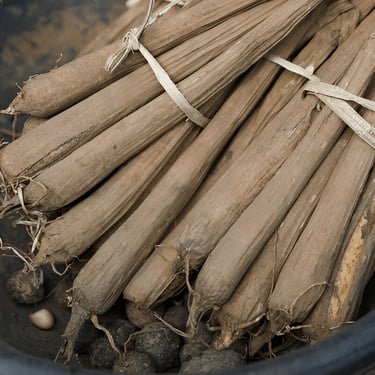
Sprouts (Panai Kizhangu):
Obtained from germinated seeds, these are roasted and eaten as a nutritious snack high in fiber.
Tender Seeds:
The soft kernel inside the sprouted seed is also edible and considered a delicacy.
2. Medicinal Benefits
Palmyra has been an integral part of Siddha and Ayurvedic medicine:
Palm jaggery acts as a natural blood purifier.
Fruit pulp cools the body and aids in digestion.
Tender fruit (nungu) treats stomach ulcers, acidity, and dehydration.
Neera helps control liver disorders and urinary infections.
Roots are used in traditional medicine for skin diseases and respiratory issues.
Thus, the tree is a natural healer, offering remedies for common ailments without side effects.
3. Household and Handicrafts
Palmyra leaves and stems have been used in rural households for centuries:
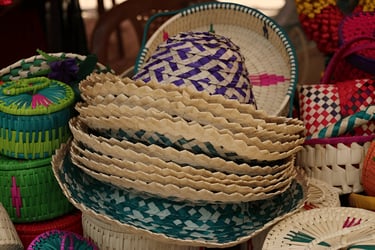
Leaves:
Used to make hand fans, mats, umbrellas, baskets, and writing manuscripts (palm-leaf manuscripts).
Leaf ribs:
Used as broomsticks, thatching material, and weaving toys.
Stems (Trunk):
Provide strong, termite-resistant wood for house construction, boats, and fencing.
Fibers:
From the fruit husk are used as ropes and brushes.
Before the invention of paper, ancient scriptures and epics were preserved on dried palm leaves – some of which are still readable today.
4. Economic Importance
For rural communities, Palmyra is not just a tree – it is a livelihood.
Palm jaggery making provides employment to thousands of families.
Handicrafts from leaves support artisans and cottage industries.
Palm fruit and nungu sales provide seasonal income for farmers.
The tree requires very little investment and grows naturally, making it a sustainable source of income for generations.
This is why it is often called the “Poor Man’s Wealth.”
5. Environmental Benefits
Palmyra trees play a vital role in protecting nature:
Prevents Soil Erosion: Roots hold the soil firmly, especially in coastal and sandy areas.
Thrives in Drylands: Needs minimal water, making it perfect for drought-prone regions.
Biodiversity Supporter: Provides nesting space for birds and small animals.
Climate Protector: Absorbs carbon dioxide and helps reduce heat in arid zones.
It is an ideal tree for climate change resilience and environmental sustainability.
6. Cultural and Historical Significance
In Tamil Nadu, Palmyra is the state tree and is celebrated in literature, folklore, and proverbs. Ancient Tamil Sangam poems mention Palmyra as a symbol of endurance and hard work. Villages often planted Palmyra trees along boundaries and roads for shade and heritage. Palm-leaf manuscripts were the backbone of ancient knowledge systems. It is not just a tree, but a cultural icon of Tamil heritage.
7. The Future of Palmyra
In today’s world of plastic waste and chemical farming, the Palmyra tree offers sustainable alternatives:
Eco-friendly Products: Palm-leaf plates and baskets can replace plastic.
Healthy Sweeteners: Palm jaggery and palm sugar are natural alternatives to processed sugar.
Green Economy: With rising interest in organic and natural products, Palmyra can boost rural entrepreneurship.
Climate Solution: Large-scale plantation can help combat desertification and support water conservation.
Preserving and planting more Palmyra trees is not just cultural pride, but a necessity for future generations.
Conclusion
The Palmyra tree is a living heritage, a natural healer, a food source, an eco-friendly material provider, and a guardian of the environment. It is rightly called the Tree of a Thousand Uses, for it nourishes, protects, and sustains life in countless ways.
In a fast-changing world, this ancient tree teaches us the importance of sustainability, resilience, and harmony with nature. Protecting and promoting Palmyra is not only about saving tradition – it is about saving the future of humanity and the planet.
Let us plant more Palmyra trees and pass on the gift of life to the generations to come.